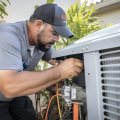
A Deltona attic in August sits at 130 degrees or higher. When the HVAC runs, it pressurizes the duct system. If the flex duct joints in those attic runs have pulled apart after years of heat cycling, some of what’s up there comes through — not just into the ducts, but into the rooms.
We’ve inspected thousands of homes across Volusia County, and Deltona fits a pattern we know well. The city’s housing stock was built predominantly from the 1980s and 1990s, when flex duct was standard and nobody pressure-tested the finished system. Decades of subtropical humidity, oak pollen, and year-round cooling have done steady work on those joints. By the time most homeowners notice the symptoms (persistent stuffiness, uneven temperatures, odors that keep returning no matter how often they clean), the ductwork has been pulling contaminants into the living space for years.
Aeroseal HVAC air duct sealing in Deltona addresses the source, not the symptoms. The process seals leaks from inside the duct system, including joints behind walls and deep in attic runs that can’t be reached by hand. Every job ends with a computer-verified leakage report showing measured before-and-after results.
TL;DR Quick Answers
What Is Air Duct Sealing in Deltona?
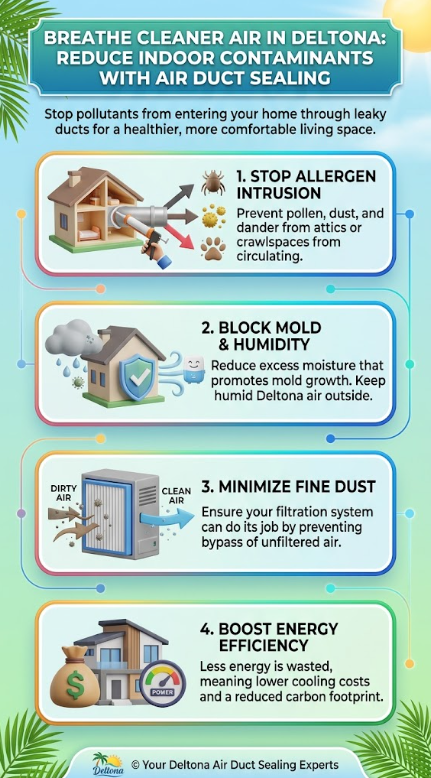
Air duct sealing in Deltona closes the gaps and leaks in your home's duct system that pull attic contaminants — insulation fibers, mold spores, pollen — into your living space every time the HVAC runs.
Why it matters here: Deltona's housing stock was built primarily from the 1980s and 1990s, when flex duct systems were installed without pressure testing. Decades of subtropical heat and humidity have loosened those joints. A running HVAC system creates a pressure differential that actively draws unconditioned attic air through those gaps and into your home.
How it works: Aeroseal, the patented process we use, pressurizes the duct system and introduces aerosolized polymer sealant particles that travel to every leak and bond at the edges until each opening is closed — including joints behind walls and deep in attic runs that can't be reached by hand. A computer monitors the process in real time and produces a printed before-and-after leakage report.
What homeowners in Deltona typically gain:
Measurable reduction in attic-sourced contaminants circulating through the home
Lower Duke Energy or OUC bills from conditioned air reaching the rooms it's meant to reach
Balanced temperatures across rooms that previously ran hot or cold
A documented leakage report confirming the result — not an estimate
Timeline: Most Deltona homes are done in four to eight hours, in a single visit, with no wall access and no disruption to the household.
Top Takeaways
Leaking air ducts are among the most common reasons Deltona homeowners report poor indoor air quality and uneven comfort, even after HVAC cleaning or filter changes.
Aeroseal works from inside the duct system, requiring no demolition and no access to walls or ceilings. Your home isn’t disrupted during the process.
Every Aeroseal job produces a printed, computer-verified report with exact before-and-after leakage numbers. You see the measured result.
Deltona’s attic heat and year-round cooling demand amplify what unsealed ducts cost on every utility bill.
The Aeroseal sealant is non-toxic, UL-listed, and composed of the same base polymer used in food-grade and medical applications.
The Climate and Construction Era Work Against You
Deltona’s growth era, primarily the 1980s and 1990s, predates the duct sealing standards that modern construction requires. Flex duct systems installed during that period were fitted with mechanical fasteners and basic tape at the joints. That tape doesn’t last. It dries, cracks, and pulls away from fittings over years of thermal cycling in attic spaces that regularly hit 130 degrees in summer.
The leaks tend to fall at precisely the locations most difficult to inspect: deep in attic runs, at joints hidden above drywall, at fittings tucked behind wall cavities. What makes Deltona’s situation harder than most is that the ducts pass through unconditioned attic spaces. A running HVAC system creates a pressure differential that pulls outside air from that attic straight into the supply stream.
What Gets Pulled Through the Leaks
In our experience serving homes across Deltona and Volusia County, what we find inside leaking attic duct systems is consistent. Blown-in insulation fibers are the most common finding: fine particles that shed from aging insulation batts and collect at duct joint edges. Rodent debris, mold spores carried on humid attic air, pollen from Deltona’s extended oak and pine seasons, and VOC-bearing dust from degrading attic materials are also routine.
These contaminants bypass the air handler entirely, so the filter never sees them. They enter the duct stream at the very gaps that let conditioned air out. Cleaning the ducts or replacing the filter won’t solve this. The gap itself has to be sealed.
How Aeroseal HVAC Duct Sealing Works
Aeroseal is a patented duct sealing technology that works from inside the duct system. The process starts with an airtightness test that measures existing leakage and documents a baseline before any work begins. Technicians cover supply and return registers, then a computer-monitored injection system pressurizes the duct network and introduces aerosolized polymer sealant particles ranging from 3 to 15 microns in size.
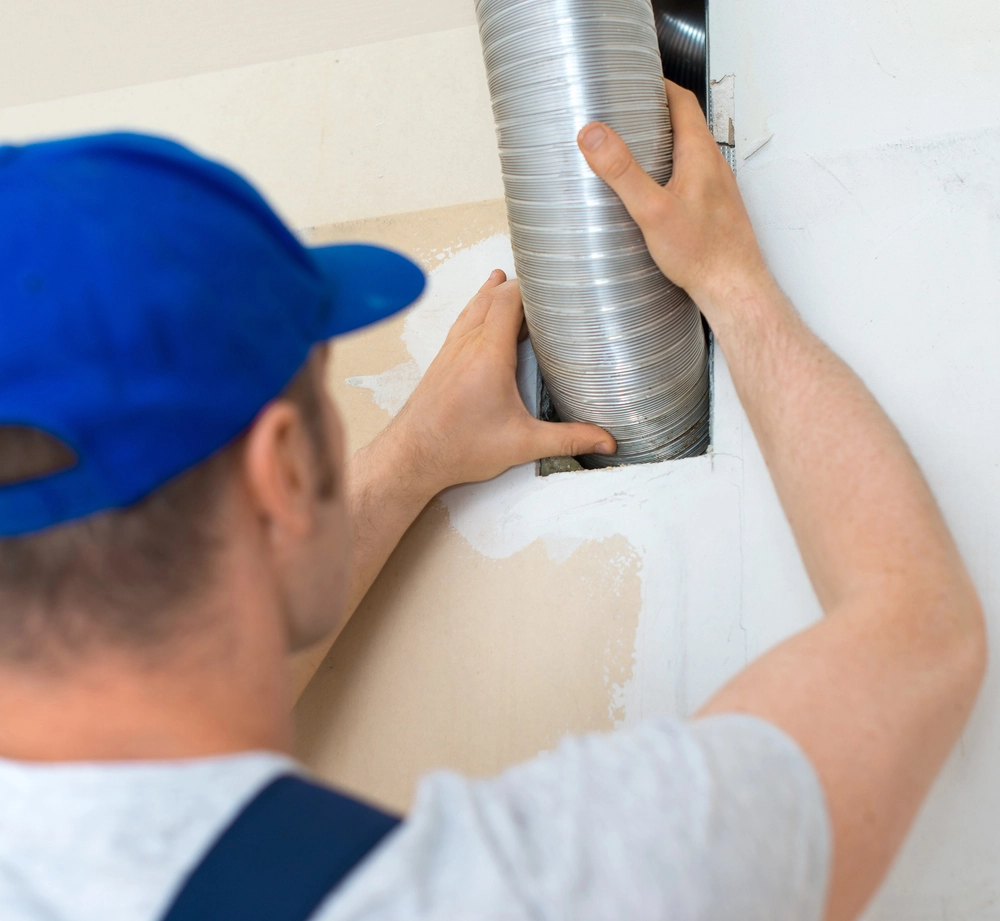
Those particles travel with the airflow to every point of leakage in the system, including joints behind walls and deep in attic runs that conventional sealing methods could only reach by opening up the walls. At each gap, the particles collect at the edges and bond together, progressively closing the opening from the inside out. The computer tracks leakage reduction in real time, and the job ends with a printed diagnostic report showing before-and-after measurements.
Aeroseal doesn’t require wall access, ceiling removal, or any structural modification to the home. In most Deltona homes, the work is done within four to eight hours, and you’re back to your normal routine when the technician leaves.
What Changes After the Work Is Done
Rooms that ran warmer or cooler than the rest of the house typically balance out within the first few days. Energy bills drop, usually within the first billing cycle. Musty odors that homeowners had attributed to general humidity or aging finishes — odors that persisted through multiple rounds of cleaning — tend to clear up once the attic-sourced air stops entering the living space.
The documented leakage reduction also changes how hard the system works. With the losses gone, the HVAC doesn’t need to run longer cycles to maintain temperature, which means less wear on the equipment and a longer interval between major repairs.
Verifying Your HVAC Contractor in Florida
Florida requires HVAC contractors to hold a state license through the Department of Business and Professional Regulation. Look up any provider at MyFloridaLicense.com before you schedule. The search returns license status, type, and any disciplinary actions on record. It takes about two minutes and tells you what you need to know.
"After inspecting ductwork across Deltona for years, the pattern is consistent: the houses built in the '80s and '90s were never designed to be pressure-tested, and the joints show it. Sealing them doesn't just improve the numbers on a report — it changes what the air in the house actually feels like."
Essential Resources
EPA: Should You Have the Air Ducts in Your Home Cleaned?
The U.S. Environmental Protection Agency’s consumer guidance on duct cleaning explains when professional service is warranted, what to look for in a qualified provider, and how poor ductwork contributes to indoor contamination. Practical and plainspoken. A good starting reference for any homeowner working through their options.
Source: EPA — Should You Have the Air Ducts in Your Home Cleaned?
EPA: Indoor Air Quality — The Inside Story
This EPA guide walks through the primary sources of indoor air pollutants, their health effects, and what you can do to reduce exposure. It includes specific guidance on HVAC systems and ductwork as contributors to indoor contamination. A useful reference for homeowners trying to connect duct conditions to the air quality outcomes they’re experiencing.
Source: EPA — The Inside Story: A Guide to Indoor Air Quality
ENERGY STAR: Benefits of Duct Sealing
ENERGY STAR’s dedicated resource on duct sealing lays out how leaky ducts reduce HVAC efficiency, drive up utility costs, and can be corrected through sealing. It includes the agency’s guidance on energy savings potential and a link to its duct sealing fact sheet.
Source: ENERGY STAR — Benefits of Duct Sealing
ENERGY STAR: Duct Sealing Overview
ENERGY STAR’s duct sealing overview covers materials, methods, and the specific duct locations (attics, crawlspaces, unfinished basements) where sealing delivers the greatest energy return. Includes a link to the agency’s DIY guide for homeowners who want to understand the full scope before calling a professional.
Source: ENERGY STAR — Duct Sealing
U.S. Department of Energy: Minimizing Energy Losses in Ducts
The DOE’s practical guide to duct energy losses covers how leakage in unconditioned spaces like attics adds hundreds of dollars a year to heating and cooling bills, how to identify problem areas, and when professional sealing makes the most sense. The attic duct context applies directly to Deltona’s housing stock.
Source: U.S. Department of Energy — Minimizing Energy Losses in Ducts
U.S. Department of Energy: Aeroseal and Lawrence Berkeley National Laboratory
The DOE’s success story on Aeroseal’s development at Lawrence Berkeley National Laboratory covers how the technology was engineered, how sealant particle size was calibrated to reach leaks in inaccessible duct locations, and the 90-to-95-percent leakage reduction rates the process achieves. Useful background for homeowners who want to understand the science before scheduling service.
Florida DBPR: Verify a Licensed HVAC Contractor
The Florida Department of Business and Professional Regulation’s license verification tool confirms whether an HVAC contractor holds a current, active state license before you book any work. Search by name, company, or license number. License status, type, and disciplinary history are all publicly accessible.
Source: MyFloridaLicense.com — Verify an HVAC Contractor License
Supporting Statistics
Up to 20 percent efficiency loss from leaky ducts. ENERGY STAR reports that leaky ducts can reduce heating and cooling system efficiency by as much as 20 percent. For Deltona homeowners running HVAC systems for the better part of twelve months each year, that efficiency gap adds up to a real annual cost.
Source: ENERGY STAR — Benefits of Duct Sealing
90-to-95-percent leakage reduction with Aeroseal. Research conducted at Lawrence Berkeley National Laboratory during Aeroseal’s development showed that the process reduced duct leakage rates by 90 to 95 percent across test installations. That leakage reduction is documented on the computer monitoring report for every job.
Source: U.S. Department of Energy — Aeroseal and LBNL
90 percent of our time is spent indoors. The EPA reports that Americans spend approximately 90 percent of their time indoors, where pollutant concentrations from sources like leaking ductwork can run significantly higher than outdoor levels. For most people, indoor air quality is the primary air quality exposure of the day.
Source: EPA — Indoor Air Quality (IAQ)
Final Thoughts and Opinion
Deltona’s climate doesn’t pause. HVAC systems here run through summer heat, through the extended humidity of fall, and through pollen seasons that start earlier and last longer than most homeowners expect when they first move to Central Florida. Ductwork installed in that environment without adequate sealing doesn’t hold up indefinitely. When it starts to fail, it does so quietly, inside walls and attic runs where there’s nothing visible to flag it.
In our experience across Volusia County, the homeowners who delay duct sealing the longest are almost always the ones addressing symptoms rather than the source. A new filter helps for a week. An HVAC cleaning improves airflow for a while. But when the ductwork is pulling attic air into the living space on every cycle, neither one holds.
Aeroseal duct sealing isn’t a seasonal maintenance item. It’s a structural correction to the way a home manages air, one that produces a documented, measured result and doesn’t need to be repeated. We’ve yet to meet a Deltona homeowner who, after seeing those before-and-after numbers on their report, wished they’d waited longer to address it.
Frequently Asked Questions
What is Aeroseal HVAC air duct sealing, and how does it work?
Aeroseal is a patented duct sealing technology that seals leaks from inside the duct system. A computer-monitored injection process pressurizes the ductwork and introduces aerosolized polymer sealant particles that travel to every gap and collect at the edges until each opening is sealed. A printed before-and-after report confirms the measured leakage reduction. The process requires no demolition and no wall access. It’s less disruptive than most homeowners expect.
How long does Aeroseal duct sealing take in a Deltona home?
Most residential Aeroseal jobs in Deltona are done in a single visit, typically within four to eight hours depending on the size of the duct system and how much leakage is present. There’s no curing period and no need to leave the house. Your system is fully operational when the technician finishes, and you’ll have the printed leakage report in hand before we leave.
How do I know if my Deltona home needs duct sealing?
The most common signs are rooms that can’t reach the thermostat setting even when the system runs fine, persistent musty or stale odors that return after cleaning, visible dust accumulation near supply registers, and energy bills that seem high for the size of the home. Deltona homes built before 2000 with original flex duct systems are strong candidates for a professional leakage assessment, even if the symptoms aren’t obvious yet.
Is Aeroseal duct sealing safe for my family and pets?
The Aeroseal sealant is non-toxic and UL-listed. Its base polymer is the same compound used in chewing gum and certain food-grade applications. Independent testing confirmed UL approval and EPA endorsement. The home doesn’t need to be vacated during the process, and there’s no off-gassing period after sealing is complete.
How do I verify an HVAC contractor in Florida before scheduling?
Florida requires HVAC contractors to hold an active state license through the Department of Business and Professional Regulation. Look up any provider at MyFloridaLicense.com before you call. The search returns license status, type, and any disciplinary actions on record. It takes about two minutes and tells you what you need to know.
Schedule Your Deltona Duct Sealing Estimate
Uncomfortable rooms, rising utility bills, and persistent odors that cleaning alone won’t touch are all signs the duct system is worth looking at. Call us for a no-obligation estimate. We’ll inspect your system, walk you through exactly what we find, and give you a clear picture of what sealing can do for your home.
Here is the nearest branch location serving the Homestead FL area…
Filterbuy HVAC Solutions - Miami FL
1300 S Miami Ave Unit 4806, Miami, FL 33130
(305) 306-5027